
















CORITON’s Practical Path to AI in Manufacturing
Editor:CORITON Editorial TeamTime:2026-09-07
CORITON shares a practical approach to AI in manufacturing: start with material shortages, inventory and purchasing, turn stable business rules into software, and introduce agent orchestration gradually.
Recently, we have been discussing what AI implementation should look like for a manufacturer such as CORITON, where sales, purchasing, warehousing, production and R&D all interact.
After asking AI to help organize our existing projects, planned functions and current difficulties, a clearer route emerged:
Solve specific business problems first. Then build software, standardize and automate. Move toward agents gradually.
This is not a universal answer, but a summary of our experience so far.
1. Start with Repetitive Work
We prioritize work that is frequent and repetitive, relies on data scattered across several systems, requires extensive manual searching and consolidation, is prone to omissions, and follows reasonably clear rules.
The initial goal is not an all-purpose AI. It is to help people check fewer systems, move less data and repeat fewer routine judgments.
2. Functions We Have Already Put into Practice
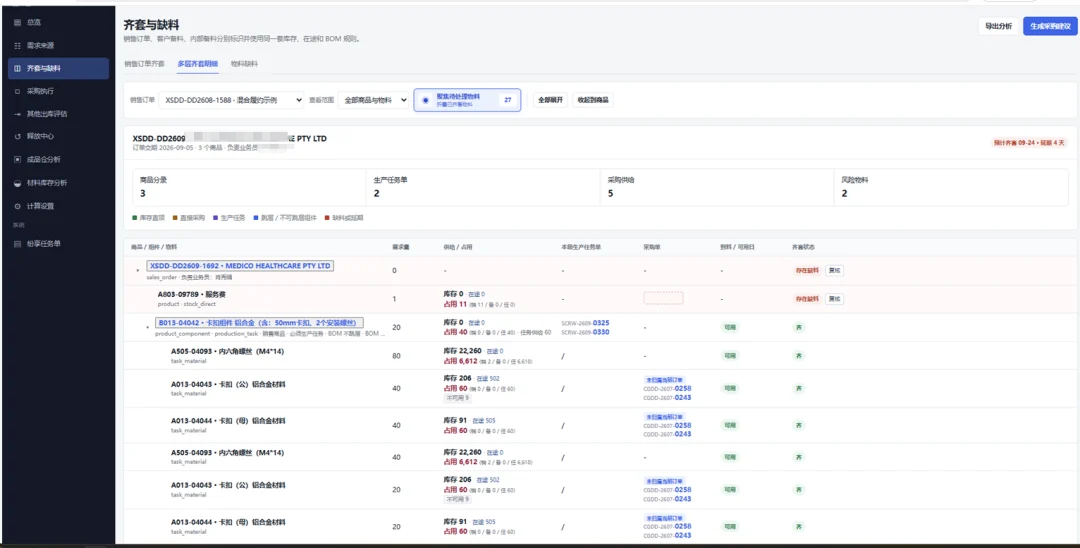
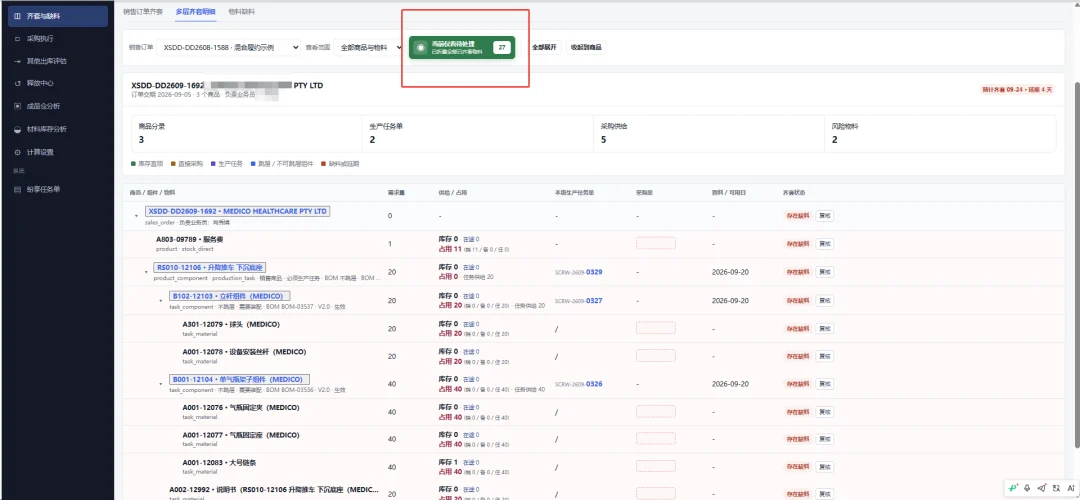
Material Readiness and Shortage Analysis
The system links order requirements, inventory and purchasing information so staff can see which orders have all required materials, which are short, what is missing, how much is needed and which issues may affect delivery.
Instead of people collecting data before making a judgment, the system increasingly organizes the data while people handle exceptions.
Warehouse Inventory Analysis
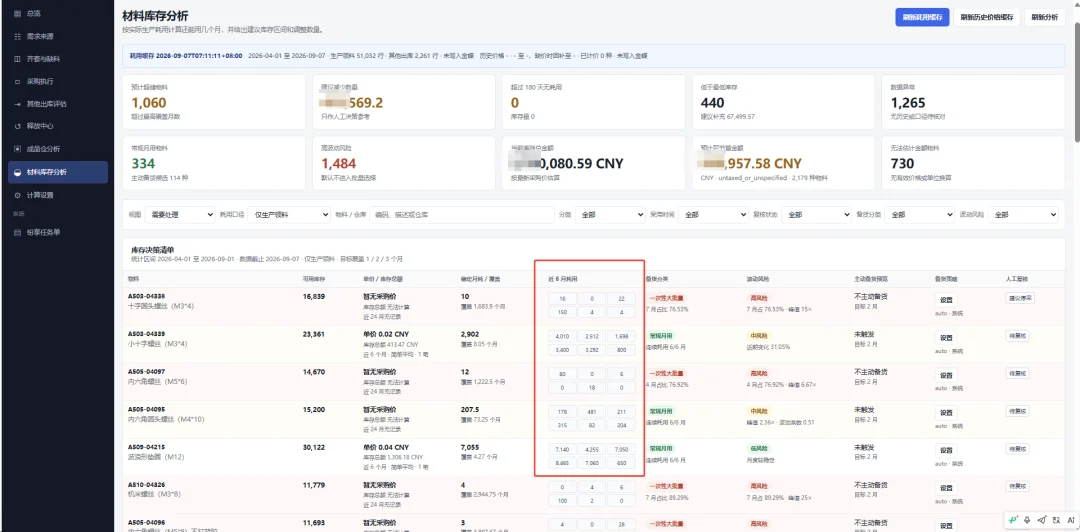
Beyond asking how much stock is available, we examine excess inventory, potential shortages, long-unused materials, stock relevant to current orders and possible overstock.
The goal is to move from reading inventory figures to identifying inventory problems. Analysis includes stock age, consumption over the previous six months, surplus quantity and the value tied up in excess stock.
Purchasing Assistant Analysis
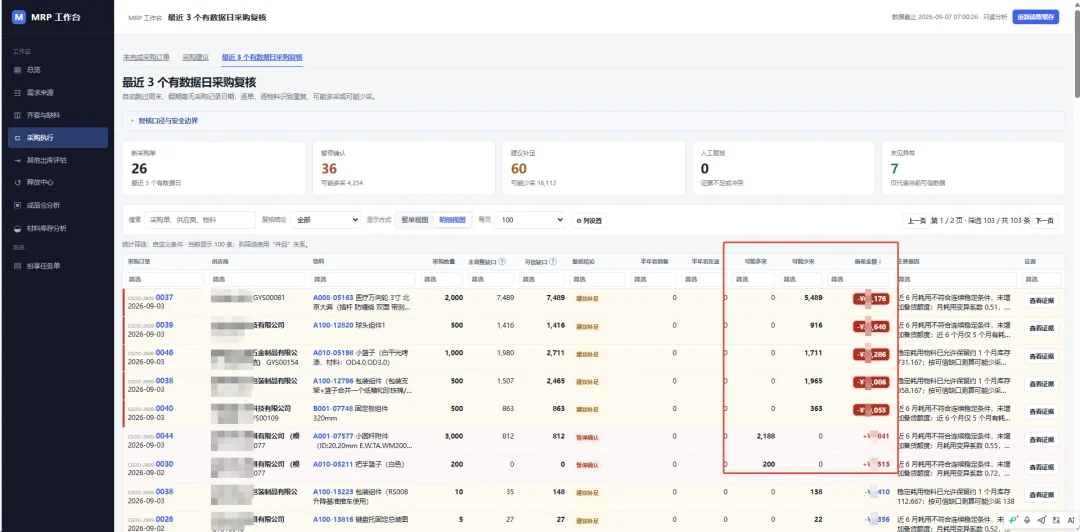
Combining orders, shortages, stock and purchasing status helps buyers identify urgent materials, items not yet ordered, purchases that may affect production and orders with delivery risks.
Buyers can focus directly on priorities instead of spending much of their time searching for data. The analysis also highlights potential over-purchasing or under-purchasing and the corresponding financial exposure.
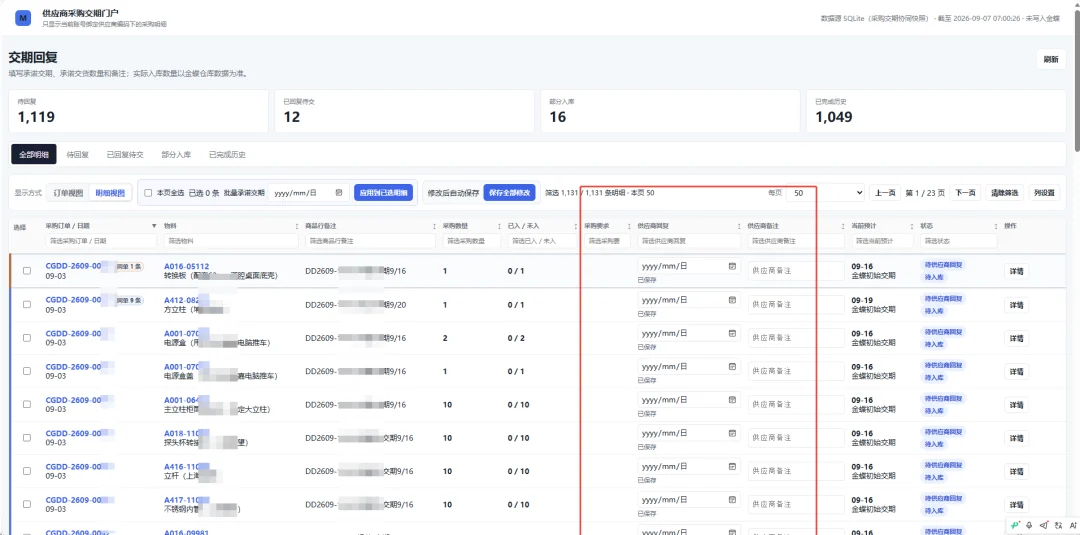
Supplier delivery updates are shared with purchasing and the relevant sales orders, helping sales teams see current delivery dates and bottlenecks.
3. A Planned Sales Follow-Up System
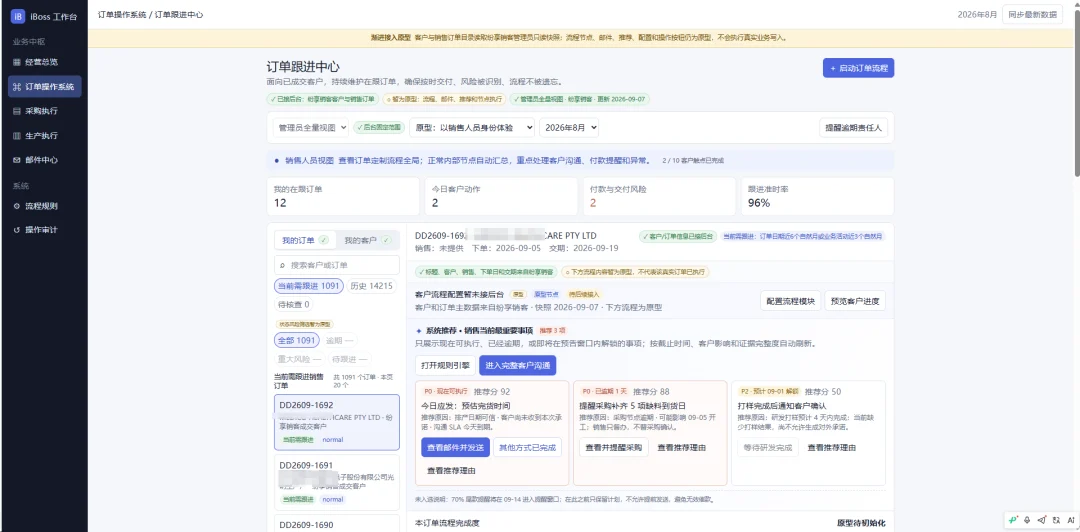
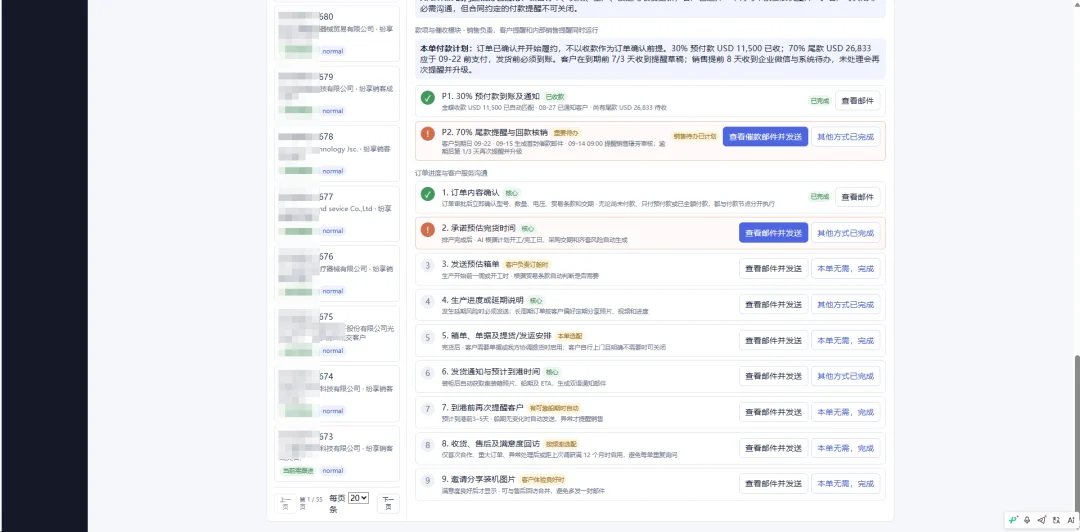
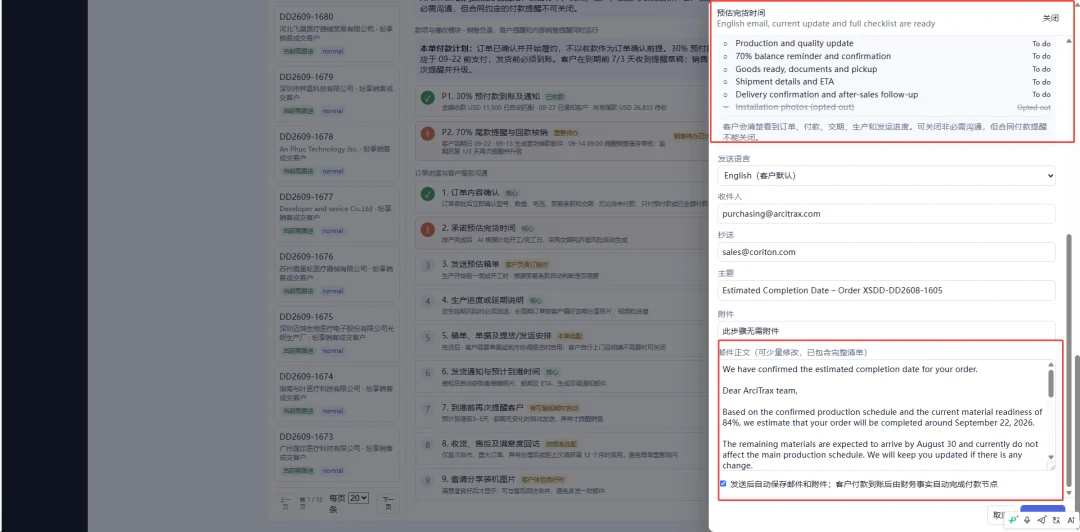
Our next step is to make sales follow-up standardized and configurable. Different order types can use different follow-up steps. The system should show what is complete, what remains, the current stage and the next action.
It can also prepare order confirmations, delivery updates and shipment notices based on order progress, leaving sales staff to review and send them.
We want to bring confirmation, production, inspection and shipment milestones into a complete timeline. Appropriate public progress information could also help customers understand what has been completed and where their order stands.
4. Not Every Task Needs an Agent or a Skill
Stable rules—such as inventory calculations, shortage checks, reminders, order routing and data aggregation—can be implemented as software, rules or algorithms. They do not need a large language model call every time.
Let AI help clarify business logic, then encode mature logic in software and algorithms.
The system can then run those rules on its own and call AI where understanding, judgment, explanation or synthesis is needed.
Good candidates for conventional software include inventory and shortage calculations, order-status checks, workflow milestones, aggregation and automatic reminders. AI is better suited to interpreting emails, investigating exceptions, assessing risks, drafting customer communications and combining information across business areas.
This improves stability and control while avoiding continuous token consumption simply for the sake of making a process “AI-powered.”
AI’s value is not to turn every process into AI. It is to apply intelligence where needed and make predictable work repeatable.
5. Why We Are Not Rushing to Build One Large Agent
An agent needs stable underlying data and business capabilities to be useful. If we later ask, “Which orders are most likely to be delayed?”, it should be able to call proven material-readiness, shortage, inventory, purchasing and production functions and provide evidence-based analysis.
For now, we prefer to build reliable hands and feet before adding the brain.
6. AI Also Helps Manufacturers Build Their Own Software
Many small internal requirements previously remained dependent on spreadsheets, manual work and several disconnected systems because software development was expensive or slow.
AI coding tools such as Codex can help turn these focused requirements into working software more quickly. This matters because the problems that affect manufacturing efficiency are often highly specific, and standard software may not fit them precisely. AI is lowering the barrier to developing tailored internal tools.
7. Practical Challenges We Still Face
We are not a professional software development team. Many colleagues understand the business but do not read code.
First, systems need continued refinement: architectural issues often become apparent only in actual use. Second, larger datasets and concurrent users still require validation. A function working for one person does not prove it will work under heavier demand.
Third, permissions and information security are essential. Poor access design can expose customer information, financial data or R&D materials. Systems such as Kingdee, Fxiaoke and Alibaba Cloud also involve tokens, secrets and access keys that must not be placed casually in repositories, chat histories or debugging logs.
Give people only the access they need, and manage development access, production access and system credentials separately.
8. Our Current Implementation Roadmap
Business problem → software → standardization → rules and algorithms → automation → AI assistance → agents → an intelligent enterprise platform.
- Identify repetitive, high-frequency problems.
- Connect scattered data.
- Build simple software.
- Standardize workflows.
- Encode stable logic in programs and algorithms.
- Develop mature functions into shared capabilities.
- Automate established workflows.
- Add AI where understanding and judgment genuinely matter.
- Let agents orchestrate those proven capabilities.
Our Takeaway
This is a progress report, not a complete manufacturing AI tutorial. Valuable AI should help businesses make predictable work repeatable and reserve intelligent assistance for the tasks that need it.
The aim is not to give employees one more chat window. It is to help them check fewer systems, do less repetitive work, make fewer mistakes and spot problems earlier.
Learn more about CORITON and our OEM services, or contact us to discuss manufacturing collaboration.
Originally published on September 7, 2026. Chinese source article. English edition reviewed by the CORITON Editorial Team on October 26, 2026.